3.1. Scenario Analysis Application
This application provides scenario analysis for operational P2X system both simulation and optimisation. In this Beta version, the layout has been configured and no flexible layout modification is allowed.
3.1.1. Power to Hydrogen Scenario
In this case study, the Power to Hydrogen system consists of:
electricity source generated by profile (e.g. wind speed or solar radiation).
electricity demand
electrolyzer
hydrogen storage
hydrogen demand

3.1.1.1. Scenario Management
Before running simulation and optimisation, user needs to defined the component parameters, boundary conditions (input profiles) and control input. By scenario_default, all parameters has been filled in. User is able to modify this value by creating new scenario. Scenario_default can’t be modified or deleted.

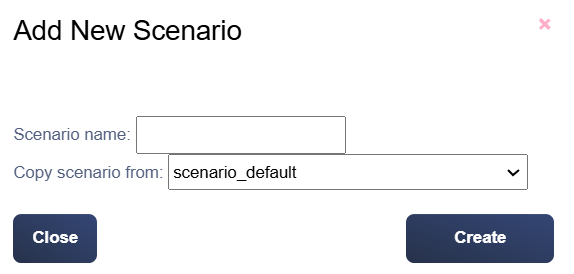
User can add new scenario by clicking new scenario button. User can choose the new scenario name and copy value from other scenario.
3.1.1.2. Component Parameters
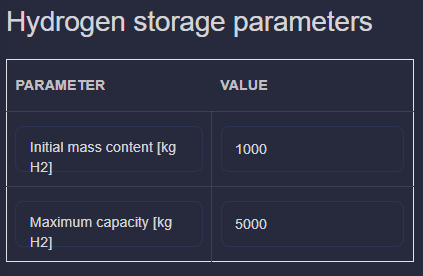
User needs to fill the electrolyzer parameters and hydrogen storage parameters

3.1.1.3. Input Profiles
There are 3 boundary conditions needs to be uploaded:
electricity source profile in MW
electricity demand profile in MW
hydrogen profile in kg/h

The CSV example format is here: example_csv.
The uploaded profile can be viewed by clicking pulse button

3.1.1.4. Control Input
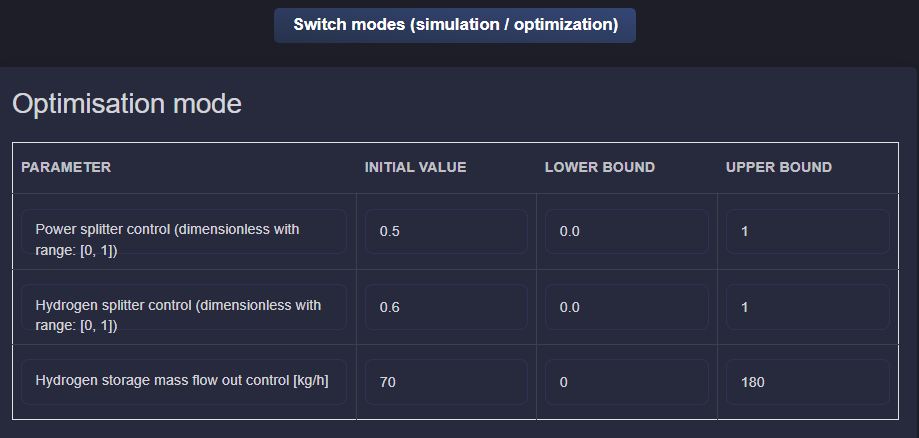
This Power to Hydrogen scenario analysis support 2 mode: simulation and optimisation. This mode can be selected from switching toggle button. There are 3 control input needs to be defined:
electricity splitter to electricity demand and electrolyzer
hydrogen splitter to hydrogen demand and hydrogen storage
hydrogen storage output
Simulation
User needs to define the control input for all control inputs as profile

Optimisation
User needs to define the boundary condition of the control inputs for the optimisation algorithm. Initial value, lower bound and upper bound.
3.1.1.5. Simulation Run
Simulation mode will be selected based on toggle described in the previous section. Now, user needs to select the time horizon of the simulation and also control input step size. Click Run button to run simulation/optimisation.

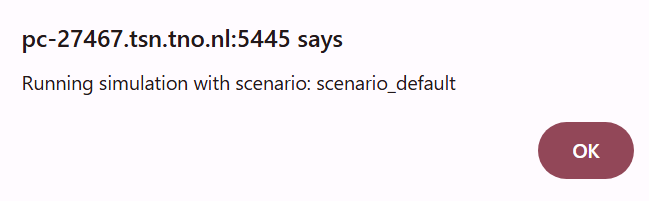
Depends on the mode, two different popup windows will appear
Simulation
Optimisation

When simulation/optimisation run is finish, another popup window will appear.

3.1.2. Power to Heat Scenario
In this case study, the Power to Heat system consists of:
electricity source generated by profile (e.g. wind speed or solar radiation).
electricity demand
heat pump
heat source
heat demand

3.1.2.1. Scenario Management
Before running simulation, user needs to defined the component parameters, boundary conditions (input profiles) and control input. By scenario_default, all parameters has been filled in. User is able to modify this value by creating new scenario. Scenario_default can’t be modified or deleted.
User can add new scenario by clicking new scenario button. User can choose the new scenario name and copy value from other scenario.
3.1.2.2. Component Parameters
User needs to fill the heatpump parameters.

3.1.2.3. Input Profiles
There are 3 boundary conditions needs to be uploaded:
electricity source profile in MW
electricity demand profile in MW
heat demand in MW

The CSV example format is here: example_csv.
The uploaded profile can be viewed by clicking pulse button
3.1.2.4. Control Input
This Power to Heat scenario analysis only support 1 mode: simulation. There are 3 control input needs to be defined:
electricity splitter to electricity demand and heatpump
Simulation
User needs to define the control input for all control inputs as profile

3.1.2.5. Simulation Run
User needs to select the time horizon of the simulation and also control input step size. Click Run button to run simulation.
Simulation
When simulation run is finish, another popup window will appear.